 UK Site

Retrofit or Replace? The Honest Business Case for UV-LED on an Existing Press

VICTORY
If your existing UV curing system is still doing its job, does it really make sense to replace it with UV-LED?
Not necessarily.
For some printing companies, continuing to run a well-maintained mercury UV system remains a practical decision. For others, rising energy costs, regular lamp changes, heat-related substrate problems or increasing maintenance requirements mean the curing system is becoming an expensive part of the press to keep running.
The important point is that moving to UV-LED curing doesn't necessarily mean replacing the press.
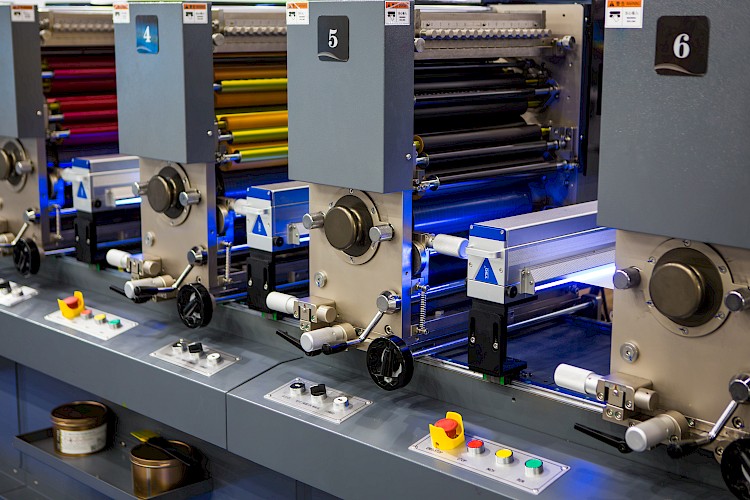
Modern UV-LED curing systems can be retrofitted to many existing flexographic and sheetfed offset presses, allowing printers to upgrade the curing stage while continuing to use the equipment they already know and rely on.
So, when does retrofit make business sense?
Retrofit, replace or keep what you have?
Start with the problem you're actually trying to solve.
If your existing UV system is reliable, energy consumption is acceptable and it produces a consistent cure at the required production speed, there may be little reason to change immediately.
But the calculation starts to look different if you're regularly replacing lamps, experiencing inconsistent curing, losing production time to maintenance or warm-up, or struggling with heat-sensitive substrates.
The decision should be based on the total lifetime cost of the curing process, rather than simply whether UV-LED is newer technology.
| Your current situation | Option to consider | Why? |
|---|---|---|
| Mercury UV system is reliable and economical | Keep the existing system | Don't replace technology simply for the sake of upgrading |
| Lamp performance has declined but the system is sound | Replace the UV lamp | A replacement lamp may restore performance with minimal capital expenditure |
| Energy and maintenance costs are increasing | Investigate UV-LED retrofit | Reduced power consumption and longer operating life can lower whole-life costs |
| Press frequently stops and starts | Investigate UV-LED | Instant on/off eliminates lamp warm-up and cool-down |
| Heat is affecting films or sensitive substrates | Investigate UV-LED | Lower thermal load can help reduce distortion and shrinkage |
| Press has years of productive life remaining | Retrofit the curing system | Modernise curing without replacing a productive press |
| You still need both technologies | Consider a modular approach | Interchangeable UV/UV-LED configurations can provide greater flexibility |
What does the business case for UV-LED actually look like?
Energy savings are often the headline benefit, but they shouldn't be the only factor in your calculation.
Victory North America's Offset UV-LED System can deliver up to 60% lower power consumption than conventional mercury lamps, while our Flexo UV-LED System can deliver up to 70% power savings in comparable applications.
Both are designed specifically with existing presses in mind.
A proper business case should consider:
- current electricity consumption
- annual press operating hours
- replacement lamp costs
- maintenance and downtime
- warm-up and cool-down periods
- cooling and exhaust requirements
- substrate waste caused by heat or inconsistent cure
- remaining productive life of the press
- ink and coating compatibility.
Our latest Flexo and Offset UV-LED systems are designed for an average operating life of 30,000+ hours and provide instant on/off operation.
Over thousands of production hours, those operational differences can become financially significant.
When does retrofitting make more sense than replacing?
A productive press shouldn't automatically become obsolete because one part of its technology has moved on.
This is one of the strongest arguments for retrofit.
Victory North America's Flexo UV-LED System is designed to retrofit presses including OMET, Bobst, Mark Andy, Nilpeter and Gallus, while our Offset UV-LED System can be configured for presses including Heidelberg, Komori, Mitsubishi and Man Roland.
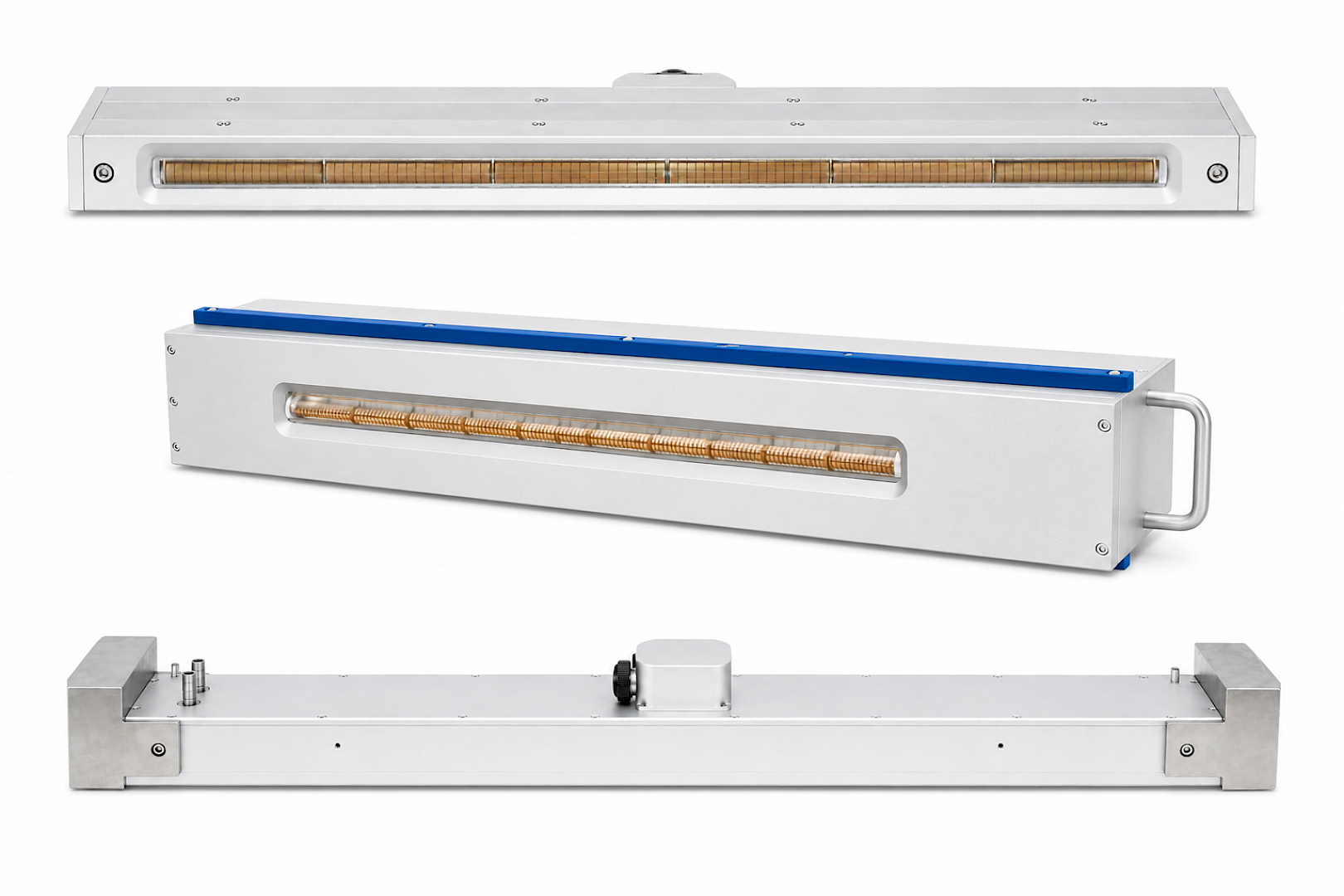
Customizable lamp cassettes and mounting arrangements allow the curing technology to be designed around the press.
For a business with a mechanically sound press and established workflow, that can provide a much more targeted investment:
Keep the productive asset. Modernize the part that's becoming expensive to run.
But UV-LED isn't automatically the right answer
Switching from mercury UV to UV-LED isn't simply a case of removing one lamp and installing another.
Ink chemistry matters. Wavelength matters. UV dose matters. Press speed matters.
A UV-LED system that isn't correctly matched to the ink, substrate and production conditions can still produce poor curing results.
That's why a retrofit should begin with an assessment of the existing process rather than simply choosing an LED system.
Will my existing UV inks work with UV-LED?
This should be established early.
Traditional mercury lamps produce a broad spectrum of UV output. UV-LED systems operate within much narrower wavelength bands.
For example, Victory North America's Digital UV-LED System is available across 365nm, 385nm, 395nm and 405nm, while our Flexo and Offset systems operate at 385nm/395nm.
The ink or coating therefore needs to respond effectively to the wavelength being used.
Some formulations may be suitable or adaptable; others may require an LED-compatible ink.
Don't specify the LED system first and investigate the ink afterwards. The light source, wavelength, ink chemistry, substrate and production speed should be considered together.
Can UV-LED maintain production speed?
Yes — provided the system is correctly specified.
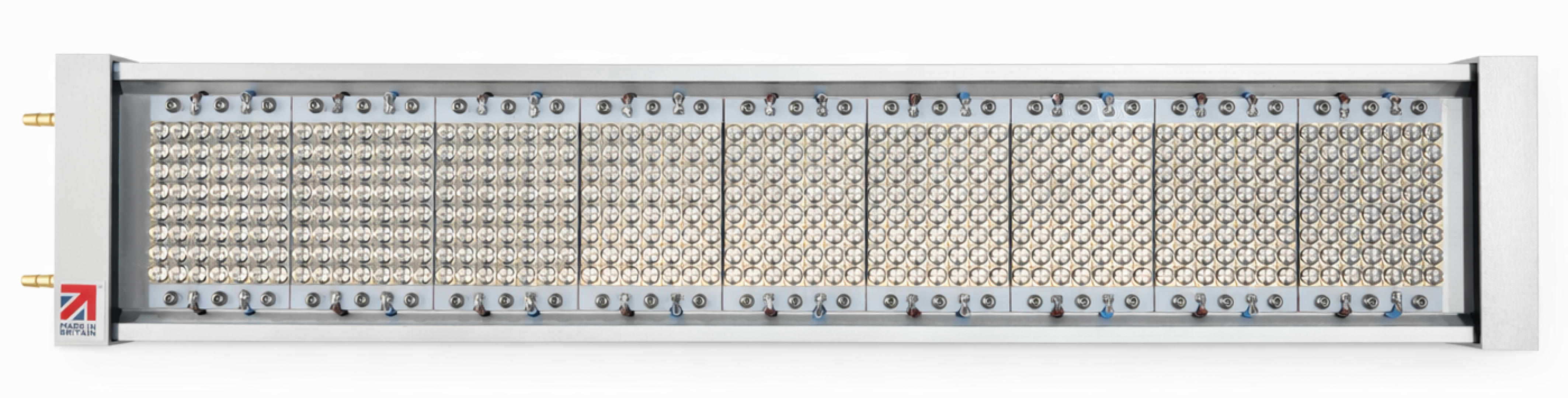
Victory North America's Flexo UV-LED System, for example, provides optical intensity up to 30W/cm² at 385nm/395nm and is designed to support printing speeds of 200+ meters per minute.
But intensity alone doesn't determine whether an ink cures.
As line speed increases, exposure time decreases. If an ink cures successfully when the press is running slowly but becomes tacky or under-cured at production speed, the relationship between wavelength, intensity, dose, working distance, ink formulation and line speed should be investigated.
Troubleshooting: Why isn't my UV ink fully curing?
Before assuming the curing system needs replacing, check some of the fundamentals.
Is the wavelength correct?
The LED output needs to match the photoinitiator response of the ink or coating.
Is enough UV energy reaching the substrate?
Increasing line speed reduces exposure time, so the system needs sufficient output for the required production speed.
Is the working distance correct?
The distance between the LED source and substrate can affect the energy reaching the printed surface.
Is the ink LED-compatible?
An ink that performs correctly under broad-spectrum mercury UV won't automatically behave the same way under narrow-band LED output.
Is cooling working correctly?
UV-LED reduces the thermal load on the substrate, but the LED modules themselves still require effective thermal management.
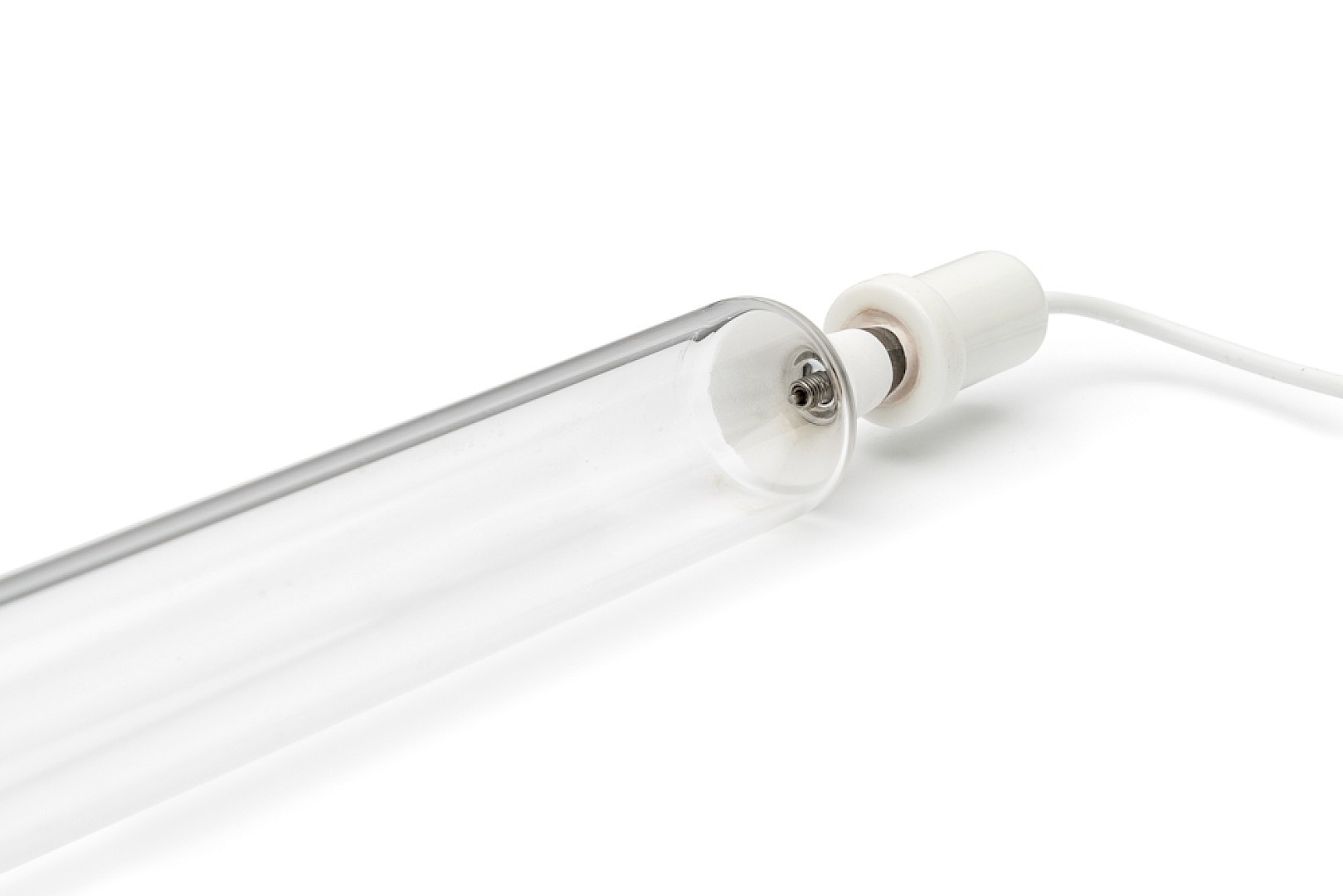
Sometimes the answer is a UV-LED upgrade. Sometimes it's a process adjustment. And sometimes a replacement UV curing lamp is all that's required.
What about heat-sensitive films?
Heat can be one of the clearest reasons for investigating UV-LED.
Conventional mercury UV produces UV energy alongside significant heat. On temperature-sensitive films, labels and packaging materials, that additional thermal load can contribute to distortion or shrinkage.
UV-LED provides a much lower thermal load at the substrate, which can be particularly useful for converters moving between different films and label stocks.
For digital and inkjet applications, Victory North America's Digital UV-LED System produces no IR radiation, making it suitable for heat-sensitive materials.
Do you have to convert the whole press at once?
Not necessarily.
Victory North America's Flexo UV-LED System can use interchangeable UV and UV-LED lamp cassettes, allowing printers to retain flexibility between technologies.
This can make sense when only some jobs have moved to LED-compatible inks or when a printer wants to introduce UV-LED progressively rather than immediately convert an entire line.
The business case doesn't have to be all or nothing.
UV-LED Retrofit FAQs for Existing Printing Presses
Can I retrofit UV-LED to my existing printing press?
In many cases, yes. Retrofit systems can be configured around existing flexographic and sheetfed offset presses. Press make and model, installation space, curing width, production speed and the existing curing arrangement should all be reviewed first.
How much does it cost to retrofit from mercury UV to UV-LED?
There isn't a useful one-size-fits-all figure. Cost depends on press configuration, curing width, number of stations, required intensity, cooling, controls and the mechanical and electrical integration required.
Instead of looking only at purchase price, calculate total cost of ownership and expected payback.
What is the payback period for UV-LED?
This depends on how your press operates.
A high-utilization press with several mercury lamps and significant energy consumption can present a much stronger financial case than a press that only operates occasionally.
Use your own electricity costs, operating hours, lamp costs, maintenance requirements and downtime to calculate the potential return.
Do I need to change inks?
Potentially. UV-LED uses specific wavelength bands, so the ink or coating chemistry needs to be compatible with the selected wavelength.
What UV-LED wavelength do I need?
That depends primarily on the ink, coating and application. Don't select wavelength based on the press alone. Your ink specification and curing requirements should form part of the system specification.
Should I replace my UV lamp or upgrade to UV-LED?
If the existing curing system remains reliable and economical, replacing the mercury lamp can still be the most sensible option.
If you're experiencing increasing energy consumption, regular lamp replacement, excessive heat, downtime or limitations with newer substrates, it's worth calculating the total lifetime cost of a UV-LED retrofit.
So, retrofit or replace?
There isn't one answer for every press — and there shouldn't be.
If a conventional UV system is performing reliably and economically, Victory North America can continue to support it with replacement UV curing lamps.
If the press itself has plenty of productive life remaining but its curing system is becoming expensive to operate, a UV-LED retrofit may offer a stronger long-term business case than replacing the press or continuing to absorb rising running costs.
The decision should come down to measurable factors: operating hours, energy consumption, lamp replacement frequency, maintenance, substrates, ink compatibility, production speed and expected press life.
At Victory North America, we support both conventional UV and UV-LED curing technology. That means the conversation doesn't have to start with:
“How do we replace your existing system?”
It can start with a more useful question:
“What's the most financially sensible way to keep this press curing effectively?”
Considering a UV-LED retrofit?
Talk to Victory North America about your existing press, curing setup, inks, substrates and production speeds. We can help you assess whether maintaining your existing system, replacing the lamps or moving to UV-LED makes the strongest case for your application.
Explore our UV Curing Systems
Ready to discuss specific products or a custom solution?