 UK Site
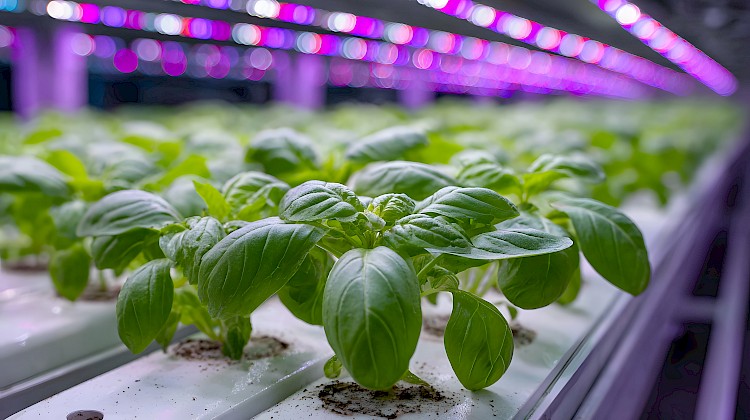
How IR and UV Are Used in Horticulture and Vertical Farming

VICTORY
When most people think about growing food, they think about soil, water, and sunlight. Light is the obvious ingredient — but which wavelengths of light, and why, is a conversation the horticultural industry is only just beginning to have at scale.
Infrared and ultraviolet sit on either side of the visible spectrum. You can't see them work. But for growers — whether they're running a commercial greenhouse, a vertical farm in an urban warehouse, or a propagation facility supplying garden centers — IR and UV are quietly becoming some of the most powerful tools in the operation.
We've been supplying lamps and fixtures for specialist applications for a long time. Horticulture is one of the areas where we see some of the most compelling uses of the technology — and one of the areas where the potential is still being discovered.
Infrared Heating in Horticulture: Energy-Efficient Warmth for Greenhouses and Vertical Farms
Infrared radiation is, at its most straightforward, a precise and efficient way to deliver heat. In horticulture, that precision matters enormously.
IR Heating for Propagation and Germination: Root Zone Warmth Without the Energy Waste
Germination is temperature-dependent. Most seeds have a target soil temperature range for optimal germination — too cold and they remain dormant, too warm and you risk damage. Infrared heating allows growers to warm the root zone, the propagation tray, or the substrate directly without unnecessarily heating the surrounding air.
This is particularly valuable where ambient temperatures for much of the year make maintaining consistent propagation conditions energy-intensive. IR heating delivers warmth to the plant and growing medium rather than the room — a meaningful efficiency gain when energy costs are a primary concern for growers.
Near-infrared light has also been shown to have a more direct biological effect on germination. Treatment of seeds with wavelengths in the 800–1000 nm range has been demonstrated to improve germination rates and seedling vigor across a range of horticultural species — an effect that goes beyond simple warming.
Infrared Greenhouse Heating: Lower Energy Consumption, Better Heat Distribution
Conventional greenhouse heating circulates warm air or uses overhead pipe systems. Infrared heating works differently: rather than heating the air, it warms the surfaces and plants it reaches directly.
Research from the International Society for Horticultural Science has demonstrated that net heat consumption with infrared heating in greenhouses is measurably lower than comparable overhead pipe systems — with one study showing reductions of around 12%. In an industry where energy is one of the largest operating costs, that's not a marginal gain.
For growers managing heated greenhouses or high tunnels through fall and winter, the efficiency case for IR heating deserves serious attention.
Infrared Heating for Vertical Farms: Zone-Specific Climate Control
In a vertical farm, the environment is entirely engineered. Every input — water, nutrients, CO₂, light, and temperature — is controlled and optimized. This is where infrared heating comes into its own.
IR only heats the component or coating, not the entire oven chamber, which reduces startup times and energy losses. In a vertical farming context, this translates to zone-specific temperature management across growing tiers without the inefficiency of heating large volumes of air. You can deliver precise, repeatable conditions at the canopy and root zone level — the variables that actually drive crop performance.
Ultraviolet in Horticulture: Plant Health, Crop Quality, and Disease Control
UV's role in horticulture is more nuanced, and considerably more interesting, than most people assume. It isn't simply a disinfection tool — though it excels at that too. UV light has direct, measurable effects on plant physiology, crop quality, and disease management.
UV and Plant Secondary Metabolites
Plants don't experience UV passively. When exposed to UV-A and UV-B radiation, they trigger biochemical defense responses — and those responses produce compounds that are highly valuable from a nutritional and commercial standpoint.
UV lamps have been installed in greenhouse cultivation to emit particular wavelengths that promote the generation of secondary metabolites such as anthocyanins in berries, improving their antioxidant activity. Flavonoids, phenolics, and anthocyanins — the compounds associated with the health benefits of colorful fruits and vegetables — are produced in greater quantities under UV exposure.
UV-B radiation has been shown to significantly increase the overall antioxidant potential of lettuce through enhanced levels of secondary metabolites including total phenolics, flavonoids, and anthocyanins, without negatively impacting photosynthetic activity.
For vertical farm operators growing premium salad greens, herbs, or functional foods, the ability to dial up the nutritional and sensory quality of the crop through controlled UV exposure is a genuine commercial differentiator. The produce coming off the line is more nutritious, more flavorful, and more distinctive — not by changing the variety, but by optimizing the light environment.
UV-C for Disease and Pest Management
UV light, particularly in the UV-C spectrum, is emerging as a sustainable alternative to chemical pesticides for managing plant diseases. UV light disrupts the DNA of fungi, bacteria, and some insect pests, reducing their ability to survive and spread. The method is non-chemical, residue-free, and environmentally friendly, making it an ideal fit for organic and residue-conscious production.
Powdery mildew is one of the most persistent and costly fungal diseases in horticulture — affecting strawberries, cucumbers, tomatoes, ornamentals, and a wide range of other crops. Traditionally managed with fungicides, it's becoming increasingly difficult to control as resistance builds. UV-C technology applied several times per week has been shown to effectively prevent powdery mildew in horticulture, with a treatment speed of around 1.2 mph allowing a single UV application system to keep disease under control across a growing area of approximately 10 acres.
The use of short-wavelength 222 nm UV-C light has also shown promise in eliminating fungal pathogens and enhancing resistance against Colletotrichum and Botrytis infections in strawberry plants.
Beyond mildew, UV-C has demonstrated efficacy against gray mold (Botrytis cinerea), downy mildew, bacterial leaf spots, and a range of other pathogens that cost growers significant yield and produce quality every season. For certified organic operations, or any grower working toward reduced-chemical production under evolving regulatory frameworks, UV-C offers a credible, scalable, and residue-free route to disease management.
UVA and UVB: Supporting Compact, Resilient Crops
Beyond metabolite enhancement and disease control, UV-A and UV-B play a role in photomorphogenesis — the way plants physically develop in response to light quality.
UV radiation can enhance plant growth, yield, and quality, making it a valuable tool in controlled environment agriculture. Broad-spectrum lighting that includes UV has proven valuable for growers by promoting compact, resilient plants and enhancing metabolite production.
In a vertical farming context, a compact growth habit isn't just an aesthetic preference — it's an operational necessity. Taller plants mean fewer tiers, less efficient use of vertical space, and more complexity in harvesting. UV exposure, properly managed, gives growers a non-chemical route to the compact, dense growth profiles that make indoor production economically viable.
IR and UV in Horticulture: How Infrared and Ultraviolet Work Together Across the Growing Cycle
One of the things we find most compelling about horticulture as an application area is that IR and UV aren't competing technologies here — they complement each other at different points in the growing process.
Infrared handles the thermal side: propagation warmth, root zone temperature, energy-efficient greenhouse heating, and the precise climate management that vertical farming demands. Ultraviolet handles the biological and plant health side: secondary metabolite enhancement, disease suppression, and photomorphogenic effects on plant development.
Used together, across a well-designed growing environment, they give growers a level of control over crop quality and operational efficiency that simply wasn't available a decade ago.
Why We're Talking About This: IR and UV Lamps for Commercial Horticulture and Vertical Farming
The United States is home to a growing vertical farming sector, a substantial protected horticulture industry, and increasing pressure on growers to reduce chemical inputs while maintaining yield and quality. Light-based technology — infrared and ultraviolet specifically — is a direct response to all three of those pressures.
We supply specialist lamps and fixtures for industrial, heating, and processing applications, including horticulture. Whether it's IR emitters for propagation bench heating, UV-A and UV-B lamps for quality enhancement in controlled environment agriculture, or UV-C systems for disease management, we can help you understand what's technically possible.
If you're working in commercial horticulture, CEA (controlled environment agriculture), or vertical farming, and you want to understand what IR and UV lamps and systems could contribute to your operation, we'd like to have that conversation.
Talk to our technical team about IR and UV for horticulture
You can also explore our full lamp and fittings ranges below, or download datasheets to share with your growing team or equipment supplier.
Ready to discuss specific products or a custom solution?