 UK Site
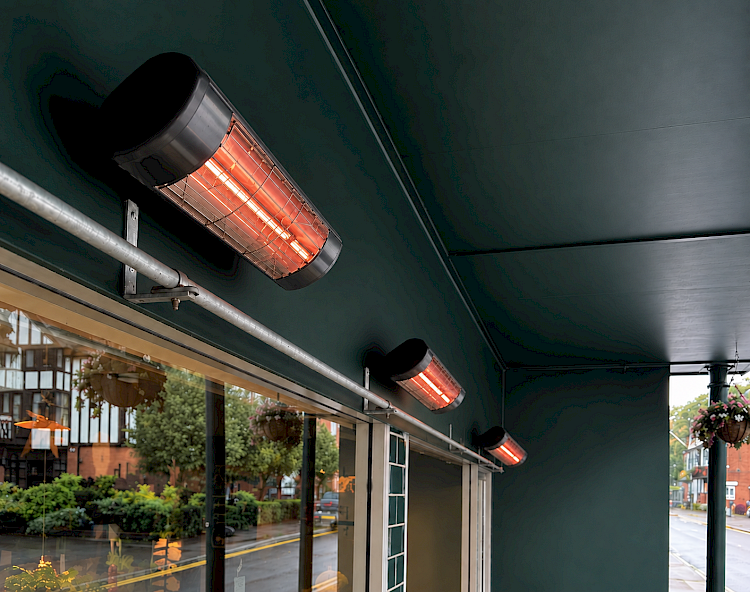
Electric Infrared vs. Gas Heating for Hospitality: Preparing for Fall & Winter
As the evenings get shorter and temperatures begin to drop, outdoor heating moves back up the priority list for restaurants, bars, hotels, breweries, cafés and other hospitality businesses.
A patio or outdoor dining area that works perfectly throughout summer can quickly become less inviting once fall arrives. With the right heating, however, these valuable spaces can remain comfortable and usable well beyond the warmer months.
For hospitality businesses preparing for fall and winter, one of the key questions is: electric infrared or traditional gas patio heating?
Electric infrared vs. gas: what's the difference?
The biggest difference is how the heat is delivered.
Gas patio heaters primarily heat the surrounding air. Outdoors, particularly during colder or windy fall and winter weather, that warm air can quickly rise or move away.
Infrared heating works differently.
Rather than relying on warming the surrounding air, infrared energy is absorbed by people and surfaces and converted into heat.
For hospitality businesses, this means warmth can be directed toward tables, patios and seating areas — exactly where customers need it.
Electric infrared vs. gas at a glance

VICTORY
| Electric Infrared | Gas Patio Heating |
|---|---|
| Direct, targeted warmth | Primarily heats surrounding air |
| Instant heat | Requires ignition |
| Suitable for zoned heating | Typically controlled heater-by-heater |
| No gas cylinders | Cylinders require storage and replacement |
| Multiple mounting options | Commonly freestanding |
| No on-site combustion | Uses gas combustion |
Why consider infrared heating this fall and winter?
Keep outdoor spaces usable for longer
When temperatures drop, outdoor tables can quickly become unused tables.
Providing targeted warmth can help make patios and outdoor dining areas more comfortable during the cooler months, helping hospitality businesses make more of their available space throughout fall and into winter.
For businesses where outdoor seating provides valuable additional capacity, that's an important consideration.
Respond quickly when the temperature drops
Fall weather can be unpredictable. A comfortable afternoon can turn into a chilly evening surprisingly quickly.
Short-wave infrared provides heat quickly when switched on, meaning heating can be used when and where it's needed rather than running throughout the day in anticipation of falling temperatures.
Heat occupied tables — not empty ones
Your patio might be full on Friday evening but only have a handful of occupied tables on Tuesday.
Infrared heating lends itself to zoned heating, allowing warmth to be concentrated around the areas customers are actually using.
With suitable controls, different areas can be operated independently, giving hospitality businesses greater flexibility during quieter fall and winter services.
No gas cylinders to manage during busy winter service
Gas heaters don't just require fuel. Cylinders need to be stored, monitored, reordered and replaced.
Running out of gas halfway through a busy winter evening isn't ideal.
Electric infrared removes the cylinder altogether, making outdoor heating simpler for hospitality teams to manage throughout the colder season.
Are infrared heaters good for outdoor hospitality spaces in winter?
Infrared is particularly suited to outdoor and semi-outdoor environments because it doesn't depend on maintaining the temperature of a large volume of surrounding air.
Typical applications include:
- Restaurant patios
- Bar and brewery outdoor seating
- Hotel patios
- Covered outdoor dining areas
- Pergolas and gazebos
- Café seating areas
- Entertainment and event spaces
Our infrared heating solutions provide targeted warmth for commercial and outdoor applications, helping businesses keep customers comfortable as temperatures fall.
Are electric infrared heaters cheaper to run than gas?
There's no single answer.
Running costs depend on local electricity and gas prices, heater output, operating hours, the size and exposure of the area and how effectively the heating is controlled.
One important consideration is how much of your outdoor space actually needs heating at any one time.
With electric infrared, heating can be concentrated around occupied areas rather than trying to maintain warmth across an entire outdoor space.
When reviewing your heating ahead of winter, it's therefore worth considering how, where and for how long your heaters will operate, rather than comparing energy prices alone.
Already have an infrared heater? Check whether you just need a replacement lamp
Getting ready for fall and winter doesn't necessarily mean replacing your existing heater.
If your infrared heater is still in good working condition but its lamp needs replacing, a replacement infrared lamp may be all that's required to get your heating ready for another colder season.
We supply a wide range of replacement infrared lamps, helping customers maintain existing heating equipment rather than unnecessarily replacing a complete system.
If you're using our HLWA infrared heater, we've also created a simple step-by-step video showing how to replace the lamp in your HLWA heater.
Watch: How to replace the lamp in your HLW infrared heater →
Checking your heaters and replacement lamps before temperatures fall is a simple task to add to your fall maintenance checklist — and can help make sure your outdoor heating is ready when customers need it.
Choosing an outdoor heater before winter
If you're reviewing your outdoor heating for the colder months, consider:
How exposed is your space?
A sheltered restaurant patio will have different heating requirements from an exposed outdoor bar or dining area.
Which areas are used most?
Prioritizing your most popular tables and seating zones can help you use heating more effectively.
Where can heaters be positioned?
Consider how heaters can provide targeted coverage while keeping valuable floor and seating space clear.
Will the heater be exposed to fall and winter weather?
Make sure the heater and installation are suitable for the environment and level of weather exposure.
Do you need separate heating zones?
Independent control can provide more flexibility as occupancy changes throughout a service.
Get your outdoor space ready for the colder months
Fall doesn't have to mean the end of outdoor dining.
Whether you're considering a move away from gas, installing outdoor heating for the first time or simply replacing the lamp in an existing heater, now is a good time to make sure your outdoor space is prepared for colder weather.
Electric infrared provides instant, targeted and controllable warmth, helping hospitality businesses keep customers comfortable and make more of their outdoor spaces as temperatures fall.
At Victory North America, we provide infrared heating technology and replacement lamps for commercial applications and can help you find the right solution for your requirements.
Ready for colder evenings? Get your outdoor space fall and winter ready.
Explore Victory North America's infrared solutions →
Or contact our North American team:
info@victorylightingusa.com
www.victorylightingusa.com
Ready to discuss specific products or a custom solution?